
A brand is not a logo: the 5 pillars of a strong brand
What a strong brand really is: visual identity, brand voice, customer experience, trust and reputation. A practical guide with a checklist.
What is a brand, really?
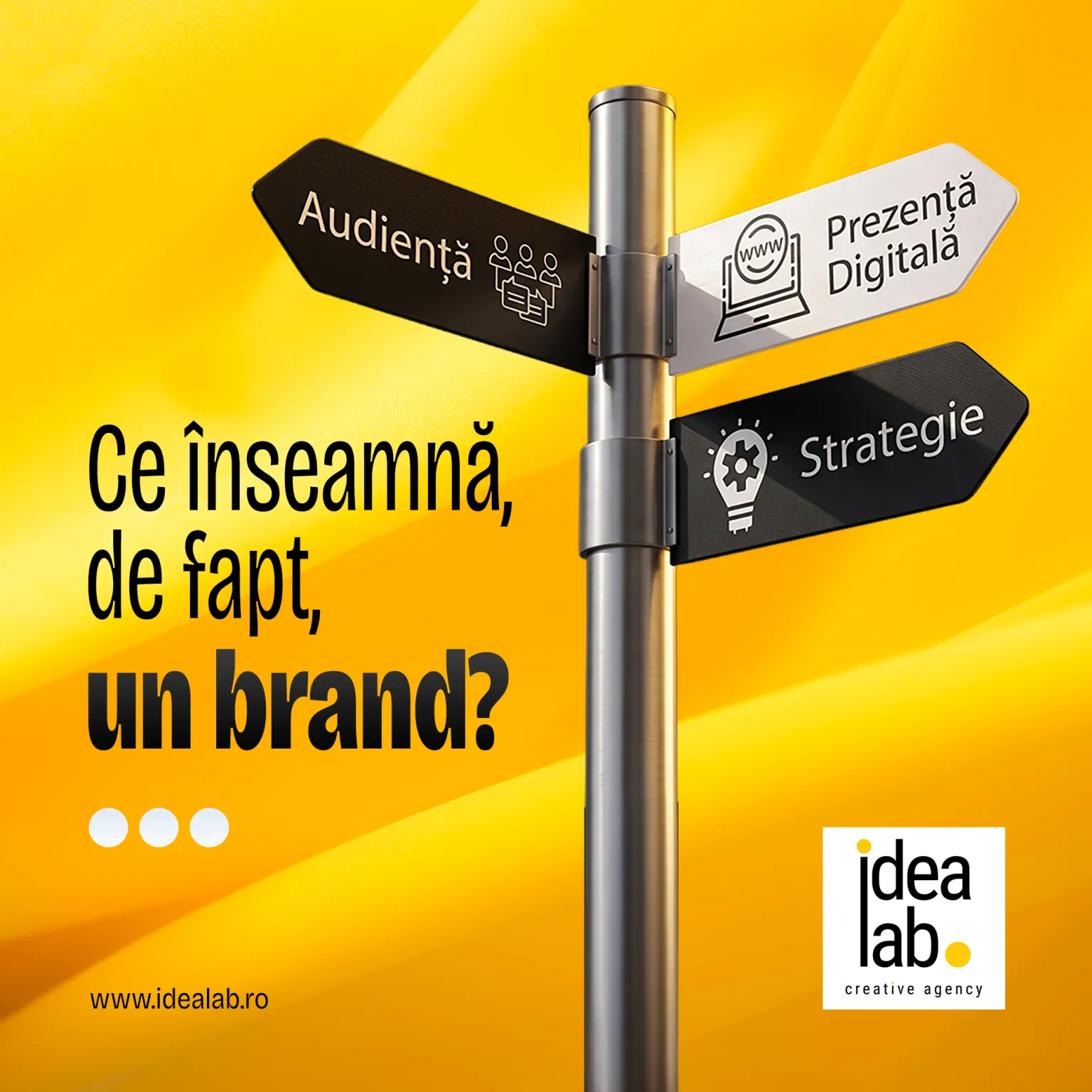
A brand is the perception the public has of a company: what it promises, what it delivers and what people say about it when it isn’t in the room. The logo is only the sign that triggers that perception, not the perception itself. A strong brand rests on five pillars: visual identity, brand voice, customer experience, trust and reputation.
The most common request we get at Idea Lab goes like this: “we need a new logo”. Most of the time, the logo is not the problem. It is just the visible part of a problem that starts earlier, in strategy.
Brand, branding, visual identity: what’s the difference
The three terms are used as synonyms, even though they describe different things.
| Term | What it means | Who owns it |
|---|---|---|
| Brand | The perception of your company in the customer’s mind | The customer |
| Branding | The process of shaping that perception: strategy, positioning, communication, design | The company |
| Visual identity | The graphic expression of the brand: logo, colour palette, typography, usage rules | The company |
The practical takeaway: visual identity is the result of a strategic process, not its starting point. When you start with the logo, you are decorating a promise you haven’t put into words yet.
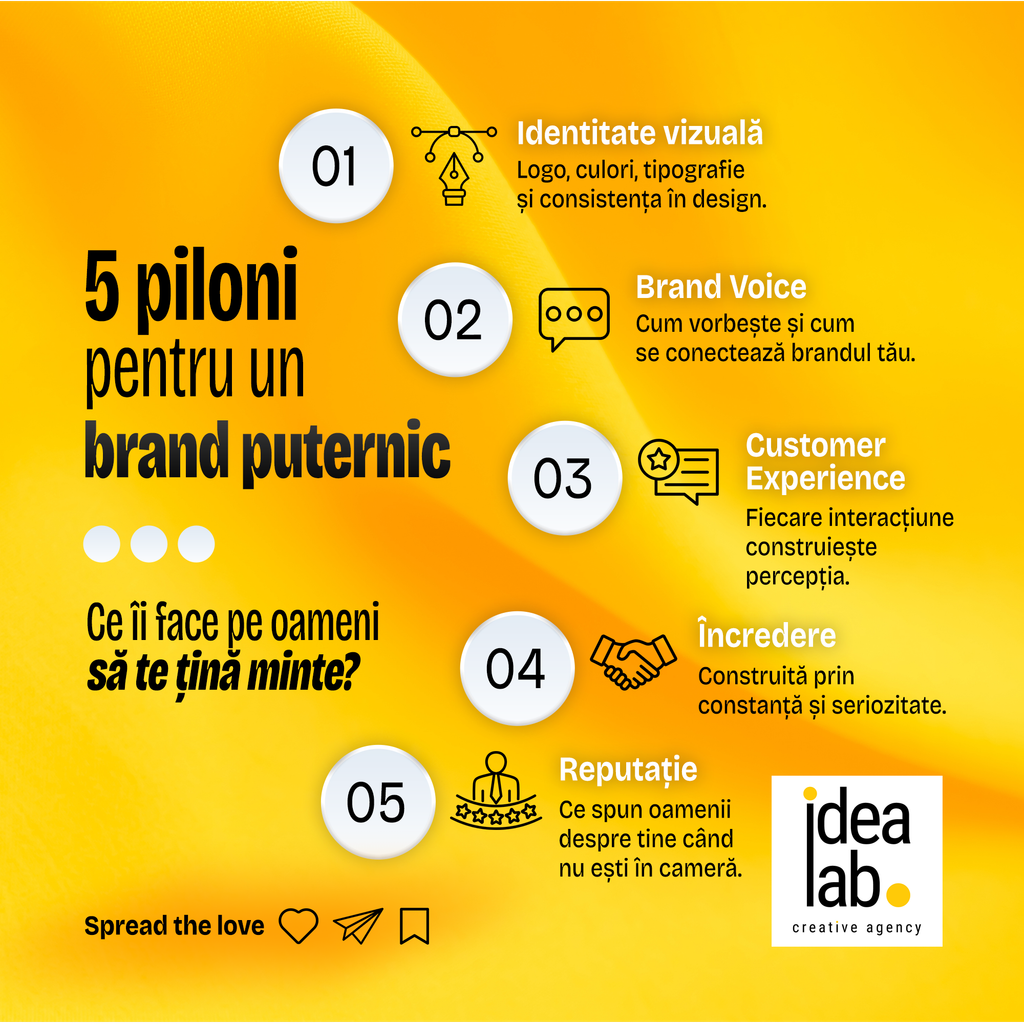
The 5 pillars of a strong brand
1. Visual identity
It includes the logo in all its versions, the colour palette, typography, the system of graphic elements and clear rules for applying them on every medium: website, social media, proposals, vehicles, uniforms, packaging.
The sign this pillar is creaking: every piece looks different, because each one was made by someone else, without a brand manual.
What you actually deliver: a vector logo, a palette with HEX/CMYK/Pantone codes, licensed typography and a brand manual with usage rules.
2. Brand voice
It is how the company sounds: in a proposal, in a Facebook post, in a reply to a negative review, in a billing email. A defined brand voice means three different people in the company write in the same tone.
The sign this pillar is creaking: the posts are relaxed and friendly, while the proposal sent to the same person reads like a legal document.
What you actually deliver: a tone-of-voice guide with 3–5 voice attributes, “do / don’t” examples and a list of words the brand uses and words it avoids.
3. Customer experience
Every touchpoint, from the first phone call to the invoice and to what happens when something goes wrong. This is the pillar that turns a customer into a returning customer.
The sign this pillar is creaking: you invest in ads, but repeat business is low and referrals are missing.
What you actually deliver: a map of touchpoints, a committed response time and a clear script for complaints and post-delivery follow-up.
4. Trust
The gap between what you promise and what you actually deliver. It is the only pillar you cannot buy with a promotion budget. It is built through consistency and lost in a single failed delivery.
The sign this pillar is creaking: your communication promises “speed” and “transparency”, and those are exactly the two things customers complain about.
What you actually deliver: promises you can back up operationally, realistic deadlines and proactive communication when delays happen.
5. Reputation
What people say about you when you are not in the room: Google reviews, conversations between partners, referrals, how former employees describe you. In 2026, reputation is also the source AI assistants draw on when someone asks “which company do you recommend for X”.
The sign this pillar is creaking: a Google profile with no recent reviews and no replies to the existing ones.
What you actually deliver: a steady process for collecting reviews, a reply to every review within 24 hours and case studies with verifiable results.
Checklist: test your brand in 15 minutes
Go through the nine questions below. Every “no” points to something to work on.
- Do you have your logo in vector format and a brand manual any collaborator can use?
- Have you defined in writing the tone your company communicates in?
- Would three people in your company describe the business the same way, in the same words?
- Can you say in one sentence what makes you different from your direct competitor, without using the words “quality” and “professionalism”?
- Do you know who your ideal client is, in terms of industry, size and specific problem?
- Do you have a committed response time for quote requests?
- Do you have a clear plan for when something goes wrong?
- Have you received reviews in the last 30 days, and did you reply to them?
- If you changed your logo tomorrow but everything else stayed the same, would your customers still recognise you?
Fewer than 6 “yes” answers: the problem isn’t the logo, it’s the brand strategy.
Three common branding mistakes
Starting with design. You pick colours and fonts before you know who you are talking to and what you promise. The result looks good and sells nothing.
Copying the market leader. You borrow the look and tone of a company that speaks to a different audience, with a different budget and business model. You become a weaker version of someone else.
Changing your identity too often. Consistency is how recognition is built. A brand that changes its visuals every 12 months resets the public’s memory every time.
When you need a rebrand and when you don’t
You need a rebrand when:
- you have changed your business model, audience or range of services;
- your current brand limits expansion into a new market or category;
- you have merged, acquired a company or spun off part of the business;
- your identity doesn’t work technically in the media you use today;
- your reputation needs rebuilding after a major negative episode.
You don’t need a rebrand when:
- sales have dropped, but the cause lies in the offer, price or sales process;
- you are bored of your logo;
- a competitor has just changed its identity.
How long a branding project takes and what it costs
A complete branding project for a small or medium-sized company usually takes 4 to 10 weeks and goes through four stages: discovery and research, strategy and positioning, visual identity, brand manual and roll-out.
The budget depends on the scope of the system delivered: a core identity package for a local company starts from a few thousand lei, while a project that includes market research, brand architecture and communication materials for several channels is an order of magnitude higher. The price difference doesn’t come from the number of logo options, but from the amount of strategic thinking and the number of applications delivered.
Frequently asked questions
Is a logo the same thing as a brand? No. A logo is an element of visual identification. The brand is the overall perception of the company: what it promises, what it delivers and what people say about it. The logo makes the brand recognisable, but it doesn’t replace it.
Where does a branding project start? With strategy: who the audience is, what problem you solve, what you promise, how you differ from the competition and what tone you use. The visual identity is built once these answers exist in writing.
What does a brand manual contain? Logo versions and usage rules, clear space, minimum sizes, the colour palette with exact codes, typography, graphic elements, examples of correct and incorrect use and, ideally, the tone-of-voice guide.
What is brand voice? The verbal personality of the company: vocabulary, tone and message structure, applied consistently across every channel, from a proposal to a reply to a review.
Can a small company have a strong brand? Yes. A strong brand doesn’t depend on budget, but on clarity and consistency. A five-person company that promises one specific thing and delivers it every time builds a stronger brand than a large company with contradictory messages.
How often should a visual identity be updated? A visual refinement every 5–7 years is normal. More often than every 2 years, frequent changes hurt recognition and use up the brand equity you have built.
Conclusion
A logo gets attention. A brand makes people come back.
The five elements — visual identity, brand voice, customer experience, trust and reputation — work as a system. You can put your whole budget into the first and still lose customers because of the other four.
At Idea Lab we work strategy first, visuals second: positioning, promise, audience and tone, then design. We build brand identities for companies in Craiova and across Romania, and for clients abroad.
If you want to put your brand through the five pillars, write to us and we’ll set up a conversation.